
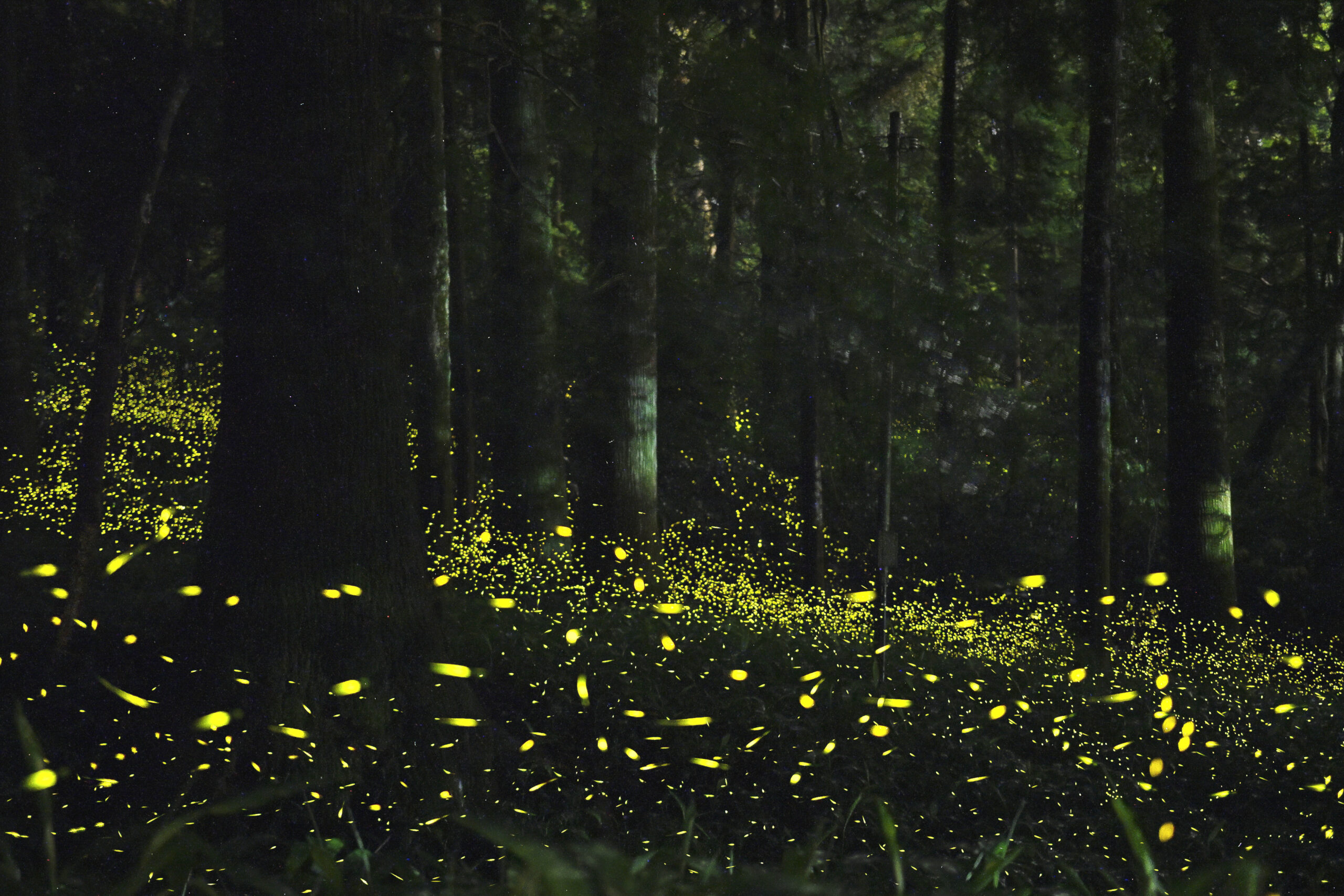
Let’s clelebrate World Firefly Day by learning about these special creatures – and how to help them!
Lightning bugs, or Fireflies, are actually small beetles that magically light up summer evenings, from moist meadows to damp forests across North Carolina and beyond. North Carolina has 30-40 different species of these moisture-loving insects, including the rare synchronous fireflies (Photinus carolinus) and blue ghost fireflies (Phausis reticulata). Let’s start with their lifecycle: they begin as eggs and may have been laid into old logs, leaf litter, in moss, or just on or below the soil surface. They hatch and spend most of their life in their larval form, crawling around and ravenously eating garden pests such as slugs and snails, for as long as 2 years! They are also eaten by many other creatures. If they survive their larval stage, they pupate for roughly a few weeks and become a full-fledged adult. The adult part of their life is only 2-3 weeks, and depending on the species, they may eat native plant pollen and nectar (and serve as a pollinator in the process), they may be carnivorous, or they may not eat at all. The symphony of light created by adult mating dances can be as short as 20 minutes or last for several hours, with some choosing to mate at dusk, others prefer deeper into the night. Different species will have different light colors on their “lanterns”, and they have unique lighting patterns. The mated female then lays her delicate eggs and the cycle starts anew. Lightning bugs, as a whole, are thought to be about 100 million years old, with individuals twinkling on and off since the Dinosaurs roamed the planet. The planet was quite different, extremely hot and wet, with Florida and most of Texas completely submerged under water. Wow! Unfortunately, today their populations are crashing, but the fantastic news is that gardeners can be at the forefront of helping these wonderful and important creatures. 5 Major Ways to Help Lightning Bugs 1 – Thoughtful & Strategic Lighting: Lightning Bugs need darkness! Scientists have found that the more artificial light is in the area, the less fireflies light up, decreasing their ability to successfully reproduce. Artificial light presents a real and growing problem to lightning bugs. You can help fireflies by choosing any – or all – of the following thoughtful strategies:
- Only use lights that you actually need – turn off as much as possible. Use curtains at night to block bright indoor lighting that shines outdoors.
- Aim light sources to face downwards.
- Turn lights down to be as dim as possible.
- Install motion-activated sensors or use timers. This can also save money, too.
- For any must-need lighting, change the bulb color to red (best) or amber/orange (2nd best). Avoid using blue or blue-tinted lights as much as possible.
Today, there are many lighting options available that make these changes easier than ever. All of these lighting changes will also GREATLY benefit migrating birds and other wildlife! See if you can get your neighbors on board – studies show that increased darkness and avoiding exposure to blue lighting at night can significantly improve sleep and overall health in humans, too.
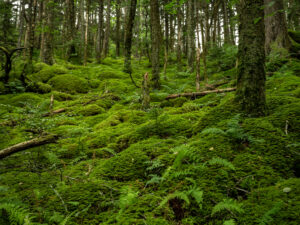
Lightning Bug Heaven, Filled with Mossy Logs
2 – Housing: Fireflies need safe, moist locations full of potential prey, and the exciting world of decaying logs fits the bill perfectly. Fireflies LOVE logs! Decaying logs provide a safe place to live, help retain necessary moisture, and provide food. You can always create firefly housing and habitat in difficult to access areas of your garden that are hard to manage, as it’s best for firefly habitat to be left undisturbed. The logs themselves can be artfully placed. If you have a location that is already mossy, that is an ideal place for a baby lightning bug nursery. Pyramid Project – Scientists experimented and came up with this simple basic design that fireflies use and enjoy, in case you enjoy building things:
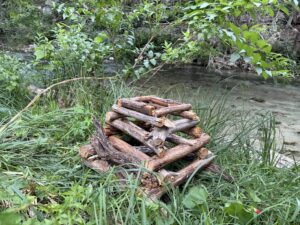
Learn more about constucting these at Firefly.org
Note that fireflies are sensitive to drought (see how the photo above has the pyramid placed next to the water). If we have long, dry spells you can water your firefly habitat – logs, bagged leaves, native plants, and all. Some lightning bugs live in trees, such as Pyractomena borealis (which is a mouthful – it does not have a common name). Here in NC, they prefer to live in the canopy and furrowed bark of mature Tulip trees (Liriodendron tulipifera), Oaks (Quercus), and Hickories (Carya). Lightning bug families will “adopt” and return to the same trees year after year. The best way to help these charming bioluminescent beetles – which have been recently seen in Madison County but no other nearby counties – is to help preserve old trees. 3 – Avoid pesticide use as much as possible, and if you must use pesticides, choose natural biopesticides (such as Bt) or organic products (such as safer soap or neem oil). Fireflies are extremely sensitive to insecticides such as organophosphates and neonicotinoids; their prey can also be killed, or in other cases, be relatively unimpacted but then spread deadly insecticides to fireflies. 4 – Plant native plants! Lightning bugs prefer a complex, layered habitat with native trees, shrubs, perennials, and grasses. You can plant these next to or near old logs or the craft pyramid. Fireflies love many of our native plants and have been found utilizing a diverse mix, such as: Celtis (Hackberry), Cephalanthus (Buttonbush), Lobelia cardinalis (Cardinal Flower), Panicum virgatum (Switchgrass), Phyla nodiflora (Frogfruit), Quercus muehlenbergia (Chinkapin Oak), Quercus schumardii (Schumard Oak), Solidago (Goldenrod), and more. You may find fireflies hanging out on all manner of plants, those that end up in grassy lawns risk being killed by lawnmowers. If you must have a lawn, you can let the grass grow a bit taller and mow less frequently, and try to practice no-mow May. 5 – Leave the leaves! Some fireflies prefer to lay their eggs directly on leaves, others will go underneath leaves where it is dark, moist, and protected. Try to leave what leaves that you can, and in areas where you choose to remove them, you can gently gather them or bag them up (in paper bags) and put them next to your logs and wooden firefly pyramids. They also make an excellent natural mulch around native plants. 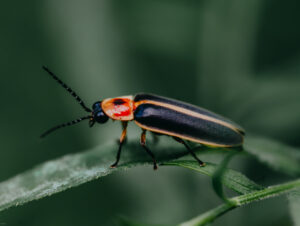 In case you don’t have any lightning bugs on your property yet, it may take a few years for them to discover your special habitat for them. Be patient. If you already have lightning bugs, they will appreciate ANY help they can get to not only survive but thrive.
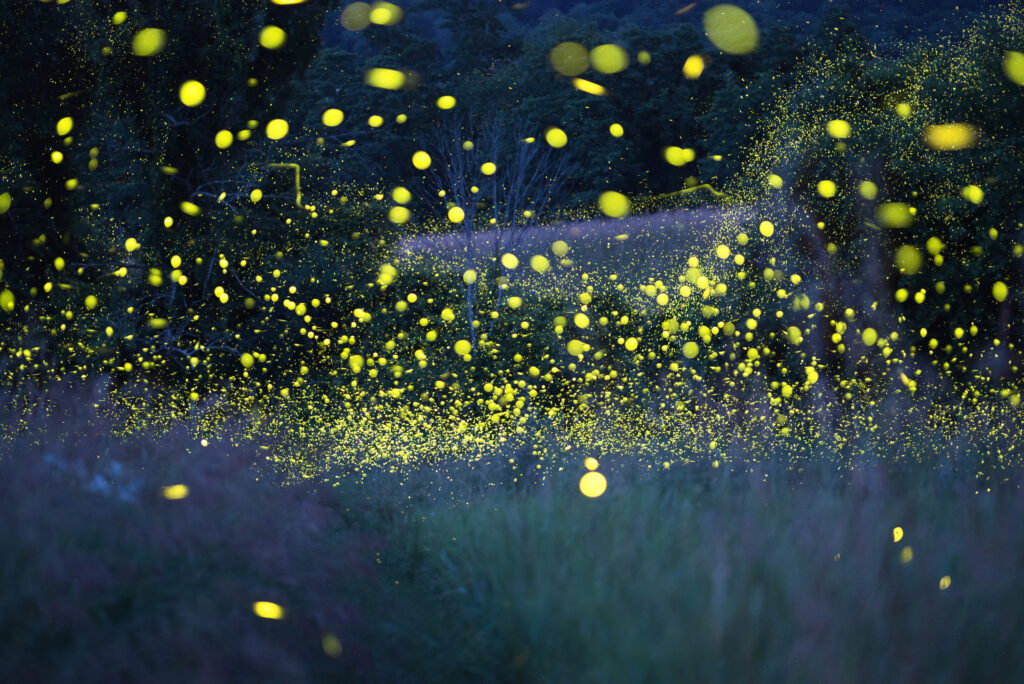
Thousands of fireflies, or lightning bugs create a magical and nostalgic evening display in a meadow. Fireflies are a staple of warm, humid, summer nights.
Do you want to learn more? There’s many great resources to read further: Firefly.org – perhaps the single most comprehensive English-language website on lightning bugs. FireflyAtlas.org Georgia DNR – Out My Backdoor: Fireflies Create Sparkling Backyard Wonderlands National Wildlife Federation – Firefly Friendly Gardening North Carolina Native Plant Society – Native Plants Make a Difference for Lightning Bugs Xerxes.org – Jewels of the Night: Guidelines for Protecting Fireflies in the United States and Canada – Extremely extensive and thorough PDF!