
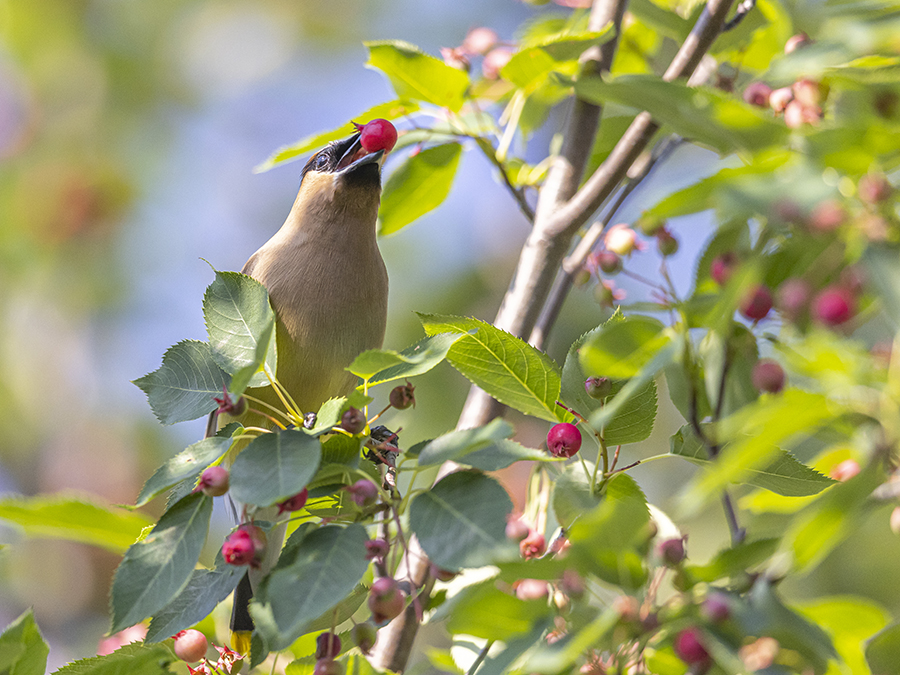
Cedar waxwing eating serviceberry.
Did you know? There are specific plants that are ecological workhorses. Amelanchier, aka Serviceberries or Juneberries, are wonderful native big shrubs / small trees that provide beauty and food in the garden. The delicious fruits are edible for humans and wildlife alike.
Serviceberries have beautiful white spring flowers, lovely blue-tinted foliage in summer, tasty red-purple berries, and awesome orange fall foliage color. They love moist, well-draining soil. They will have their best berry production in full sun, but can tolerate less light.
In spring, the flowers provide rich nectar and pollen which attracts insects, including beneficial insects that will eat pesky insects. Serviceberries are also larval host plants for multiple butterflies and moths, which means that they are a critical component for those butterflies and moths continuing in nature as a location for the insect parents to lay their eggs. As the eggs turn to caterpillars, they are now a critical lifeline to birds, as caterpillars are baby bird food, which parent birds will feed to their offspring.
As the fruits mature, birds absolutely adore the extremely nutritious berries found on Serviceberries. Cedar Waxwings, pictured above, are known for their deep love of berries.
🦋Serviceberries are the host plant for at least 120 different butterfly & moth species, and support at least 26 different bird species🐦! Unfortunately bird populations have been plummeting for a variety reasons, including loss of native plant habitat – every Serviceberry we plant can be a thoughtful lifeline to nature and they make beautiful additions to the garden.
❤️RCN Staff Favorite – many of us are growing Serviceberries in our own gardens!