
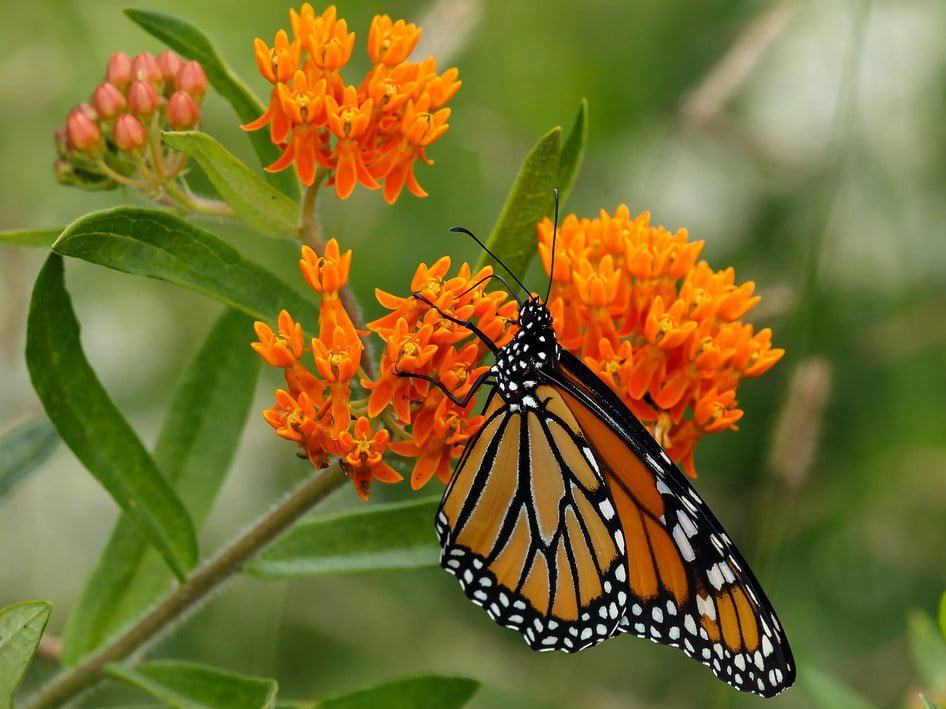
There’s been some good news in the Monarch world. Monarchs overwinter in Mexico in the oyamel fir forests where scientists count their populations every winter to see how they are faring. While the populations do fluctuate dramatically, this past winter their numbers are up, and they covered 7.24 acres, a big increase over last year’s 4.4 acres.
That said, Monarchs are still at massive risk for extinction (in the 1990’s they were occupying as many as 47 acres per winter) and need everyone’s help to survive. You can help the monarchs in multiple ways:
🦋Plant their host plants they require to complete their lifecycle, such as such as Asclepias incarnata and Asclepias tuberosa (we will have those in stock soon).
🦋Plant their favorite nectar plants, such as Asters, Coreopsis (Tickseed), Echinacea (Coneflower), Liatris (Blazing Stars), Monarda (Bee Balm), Pycnanthemum (Mountain Mint), Rudbeckia(Black Eyed Susan), Solidago (Golden Rod), and more. Planting a diversity of native flowers with a variety of bloom colors and bloom times is best.
🦋Be incredibly mindful about what pesticides are used in your garden, and when they are applied. Even organic products can harm delicate butterflies. Avoid the use of all Neonicotinoid pesticides (ex: Imidacloprid, Thiamethoxam), as scientists are discovering that they persist on plants for much longer periods of time than originally thought (Dittemore, 2025; Halsch, 2020). Neonics are systemic, which means that once they are applied, they are in every part of the plant including leaves, nectar, and pollen which is then detrimental to insects and animals who feed on them. As a pesticide, they are incredibly toxic to pollinators.
🦋Encourage your neighbors to get involved! Turn your neighborhood into a safe habitat corridor for these amazing migrating butterflies.
The fantastic news is that any monarch-friendly habitat you create – especially with a focus on native plants – will also be of MASSIVE benefit to butterflies, other pollinators, and even birds!
If you’re excited to learn more, see our extensive Garden Guide on Pollinator Friendly Gardening (PDF), we also hold a series of awesome workshops and events in June in honor of Pollination Month. We also have additional pollinator gardening resources on our website here, including how to get your garden certified for pollinators via our amazing local group Bee City Asheville.